
What Are the Causes and Symptoms?
Psoriasis is caused by an overactive immune system where T-cells (a type of white blood cell) mistakenly attack healthy skin cells. This triggers rapid skin cell production, which results in the formation of thick, scaly patches. The condition can be triggered or worsened by certain factors, including:
- Infections
- Skin injuries
- Stress
- Smoking
- Alcohol consumption
- Certain medications
Common symptoms of psoriasis include:
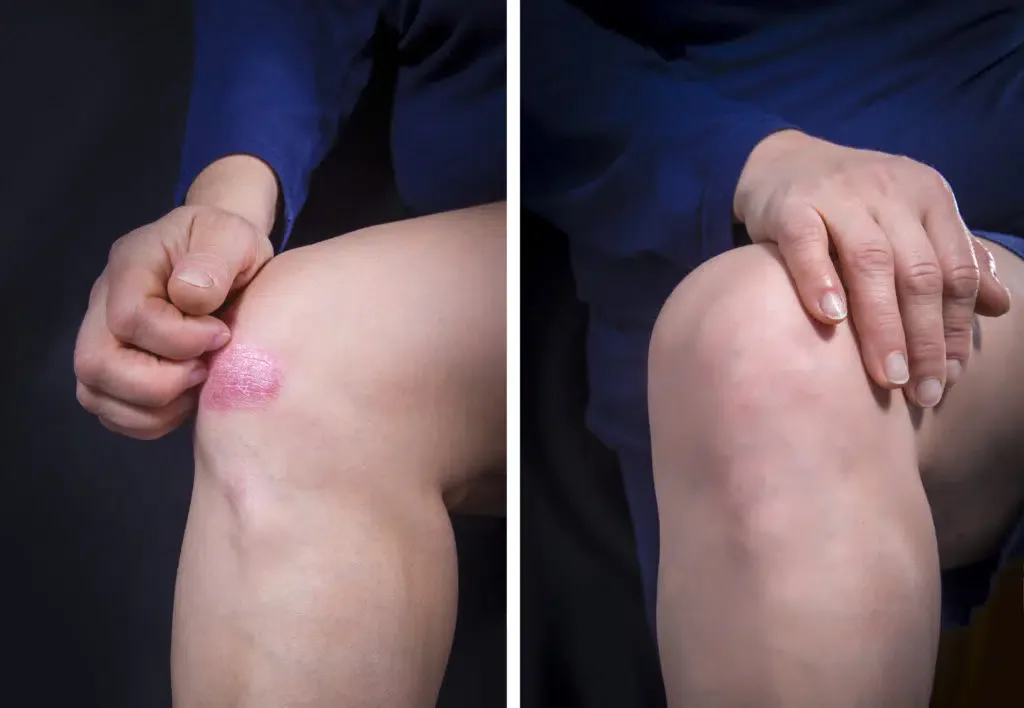
- Red patches covered with silvery scales
- Cracking, dryness, and bleeding
- Itching or burning
- Thickened, ridged, or pitted nails
In some cases, psoriasis can lead to painful swelling of the joints, known as psoriatic arthritis. Symptoms often come and go, with periods of remission and flare-ups throughout a person’s life.